According to the rules with 〜によると
Grammar Explanation: According to with 〜によると and 〜によれば
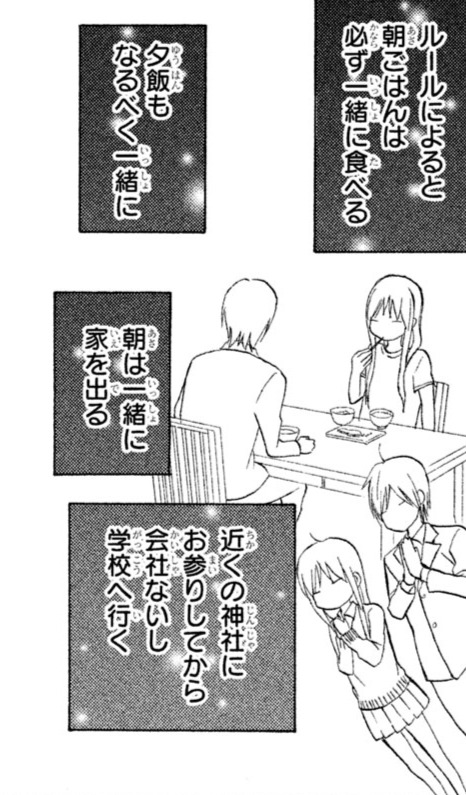
Now that Mao is living at Hiro’s house, Hiro presents her with a list of rules. Before going to bed, Mao looks the list over.
- 真魚:
- 「ルールによると朝ごはんは必ず一緒に食べる」
- “According to the rules, we must always eat breakfast together.”
- 「夕飯もなるべく一緒に」
- “We should eat dinner together too, as often as possible.”
- 「朝は一緒に家を出る」
- “We leave the house together in the morning.”
- 「近くの神社にお参りしてから会社ないし学校へ行く」
- “After praying at the nearby shrine, we go to work or school.”
Key Points
1ルールによると introduces what the rules say
- ルール is the source of the information. によると introduces the contents of the list Mao is reading.
- The rules follow directly, without a reporting ending such as そうだ. によると can name a source on its own.
2Plain verb forms state the household rules
- 食べる, 出る, and 行く are dictionary forms. In this list, they describe what Mao and Hiro are supposed to do regularly.
- The sense of obligation comes from the rule-list context. These verb forms do not mean “must” by themselves.
3必ず makes breakfast firm, while なるべく allows flexibility
- 必ず means “without fail”, so breakfast together is a firm rule. なるべく means “as much as possible”, so dinner together depends on what they can manage.
- 夕飯も adds dinner with “too”. The line leaves out 食べる, giving the fuller 夕飯もなるべく一緒に食べる.
4家を出る means “leave the house”
- With 出る, を marks the place being left. 朝は sets the morning as the time frame, and 一緒に says they leave together.
5お参りしてから puts the shrine visit first
- お参りする means to visit a shrine or temple to pay respects or pray. Here, 近くの神社 identifies the nearby shrine.
- してから combines the て-form of する with から. They pray at the shrine before heading to work or school.
6ないし joins the two destinations with “or”
- 会社ないし学校 means “work or school”. ないし is a formal way to join alternatives, fitting the written list of rules.
- へ行く applies to either destination. In this scene, Hiro goes to work and Mao goes to school.
Vocabulary
食べる (To eat)
食べる means to eat or consume food.
夕飯 (Dinner)
夕飯 means dinner or the evening meal. It sounds more domestic and conversational than 夕食.
家 (House)
家 is a building where people live.
出る (To go out)
出る means to go out or leave. It is also used when something appears or is produced.
学校 (School)
学校 means a school, where teachers provide organized instruction to students.
行く (To go)
行く means to go or move toward a place away from the speaker.
See Also
- Grammar: According to with 〜によると and 〜によれば
- Grammar: After doing with 〜てから
- Grammar: Marking the topic with は and も
- Grammar: Marking the direct object with を
- Kanji: Homes and specialists with 家
- Kanji: Learning and schooling with 学
- Kanji: Meeting and joining with 会
- Kanji: Schools and checking with 校
たいようのいえ © its respective creators. It is used here for educational commentary.