Even with 〜だって
Grammar: Emphasis
After a noun, だって means “even” or “too”. 先生だって間違える is “even teachers make mistakes”, and 私だって行きたい is “I want to go too”.
It’s a casual でも with more force behind it. も only adds one more item to the list. だって insists on it, usually because someone assumed otherwise.
Usage Notes
Noun + だって is spoken and casual. In writing and polite speech, でも carries “even” and も carries “too”. だって sounds stronger than でも, and in conversation it often has an edge. 私だって is the classic comeback of someone who feels left out or underestimated.
だって replaces は, が, and を. Other particles stay in front of it, as in 子供にだって, 電車でだって, and 今からだって.
Formation
View formation details
-
Noun + だって (even)
- 先生だって間違えることはある
- "Even teachers make mistakes sometimes."
-
Noun + だって (too)
- 私だって行きたい
- "I want to go too!"
-
Noun + particle + だって
- 子供にだってできる
- "Even a kid could do it."
- Note: に, で, と, から, and まで stay in front of だって.
-
Time word + だって
- 今だって好きだよ
- "I love you even now."
-
Noun + だって + noun + だって
- 犬だって猫だって好きだよ
- "I like dogs and cats alike."
Saying “Even” with だって
After a noun, だって picks out the least likely member of a group. If even that one fits, everyone else does too.
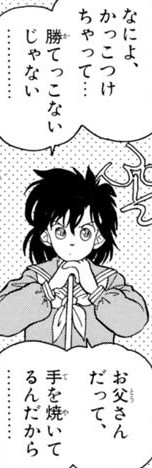
As he performs one trick after another, Kaito says he’s unbeatable at magic. Aoko says he can’t win against Kaitou Kid, the magic-using thief her police father has yet to apprehend. Kaito disregards the claim and continues disrupting class with his tricks.
- 青子:
- 「なによ、かっこつけちゃって… 勝てっこないじゃない……」
- “What's with all that showing off? There's no way he can win.”
- 「お父さんだって、手を焼いてるんだから」
- “Even Dad is having a hard time of it.”
Kaito has been showing off in class, claiming nobody can beat him at magic. Aoko knows someone he can’t beat. Kaitou Kid is a magician thief, and her father, a police inspector, has never caught him. お父さんだって means “even Dad”. 手を焼く means having your hands full with someone. If a professional is struggling, a high school show-off has no chance.
Saying “Too” with だって
だって can also mean “too”, like も with more push behind it. It often answers someone who left the speaker out or doubted them.
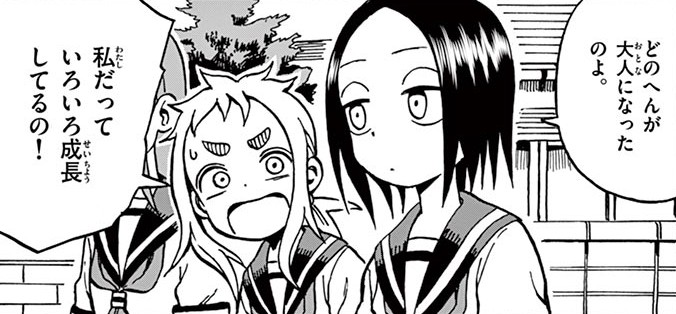
Mina buys a can of coffee, even though she’s bad at bitter drinks. When her friends question her, she says she’s grown up a bit and should be able to drink it.
- サナエ:
- 「どのへんが大人になったのよ。」
- “What part of you has grown up?”
- ミナ:
- 「私だっていろいろ成長してるの!」
- “I've grown in lots of ways!”
Mina has bought a can of coffee even though she can’t handle bitter drinks. She says she’s grown up enough to drink it now, and Sanae asks which part of her grew up. 私だって works like an insistent も. Other people grow up, and Mina has too. It’s the “me too” of someone tired of being underestimated.
私も成長してる would only add Mina to the list. 私だって argues the point.
Raising the Stakes with だって
With a time or an amount, だって stretches it further than anyone would expect.

During a group study session, Chino finds Syaro a much better teacher than Cocoa.
- シャロ:
- 「うれしいっ」
- “I'm so happy!”
- 「チノちゃんみたいな妹がいたら毎日だって教えるのに」
- “If I had a little sister like Chino, I'd teach her (homework material) every day.”
Chino has decided that Syaro is a much better tutor than Cocoa, and Syaro is thrilled. With a little sister like Chino, she says, she’d teach 毎日だって, “even every day”. Teaching once in a while would be easy. Syaro would happily do it every day.
今だって, “even now”, works the same way. 今だって好きだよ is “I still love you, even now”.
Keeping the Particle Before だって
だって takes the place of は, が, and を. Other particles stay, and だって follows them.
- 子供にだってできる。
-
Even a kid could do it.
- 今からだって間に合うよ。
- You can still make it, even starting now.
Listing Two with 〜だって〜だって
Two nouns with だって each mean “both alike”. The speaker treats them the same.
- 犬だって猫だって好きだよ。
-
I like dogs and cats alike.
- 男だって女だって関係ない。
- Man or woman, it doesn’t matter.
Telling “Even” from a Quote
At the end of a sentence, Noun + だって is usually something else. A sentence ending in だ, quoted with って, reports what someone said. Quoting and reporting with と and って covers that use.
- 先生だって知らないよ。
-
Even the teacher doesn’t know.
- 犯人は先生だって。
- They say the culprit is the teacher.
When more of the sentence follows だって, it means “even”. When the sentence stops there, it’s usually a quote.
Comparing だって with も and でも
も and でも cover the same ground in a neutral tone.
- 私も行きたい。
-
I want to go too.
- 私だって行きたい。
- I want to go too!
The も line just adds the speaker. The だって line pushes back, as if someone planned to leave the speaker behind.
- 子供でもわかる。
-
Even a child can understand it.
- 子供だってわかる。
- Even a kid gets it.
Both mean “even”. でも works in writing and in polite speech. だって is casual and louder.
Further Reading
- だって, Bunpro (bunpro.jp)
- だって, デジタル大辞泉 via Weblio (www.weblio.jp)
Related Grammar
-
That said with だって
- At the start of a sentence, だって gives a reason or an excuse. The spelling is the same, but the job is different.
-
Anyone and always with 誰だって and いつだって
- After a question word, だって means "any" instead of "even".
-
Even if with 〜たって
- After a verb or adjective, たって and だって mean "even if". With a noun the two meet, as in 雨だって行く, "I'll go even if it rains".
-
Marking the topic with は and も
- も adds "too" without the push. 私も行きたい is a plain "me too".
-
Offering an example with 〜でも
- This でも means "or something", as in お茶でも飲もう. だって can't replace it.
-
Quoting and reporting with と and って
- At the end of a sentence, Noun + だって is usually a quote, "they say it's ...".
-
Grammar in the Kansai dialect
- Kansai speech uses かて, as in 子供かて.