The potential form says that someone can do something, or that something is possible. A godan verb moves its last sound to the え row and adds る, so 読む, “read”, becomes 読める, “can read”. An ichidan verb adds られる, so 食べる becomes 食べられる. する is replaced by its own verb, できる.
Every potential is itself an ichidan verb. 読める becomes 読めない, 読めた, and 読めます like any other.
Casual speech often drops the ら from ichidan verbs, giving 見れる and 食べれる.
Usage Notes
A potential describes a state rather than an action, so the thing someone can do is often marked with が instead of を. 漢字が読める means “can read kanji”. を is common too, especially in casual speech. できる usually takes が, as in 料理ができる, “can cook”.
The potential covers skill and circumstance alike. 泳げる can mean someone knows how to swim, or that the pool is open today.
For ichidan verbs and 来る, the full られる form looks the same as the receptive. 見られる can mean “can see” or “be seen”. The ら-dropped 見れる can only mean “can see”.
見える, “be visible”, and 聞こえる, “be audible”, are separate verbs for sights and sounds that reach someone on their own. 見られる and 聞ける say that someone gets the chance to see or hear something.
Formation
View formation details
Godan verb (え row) + る
漢字が読める
"I can read kanji."
Note: The last sound moves from the う row to the え row, as in 書く → 書ける and 話す → 話せる.
Ichidan verb + られる
納豆が食べられる
"I can eat natto."
Ichidan verb + れる (casual)
その映画なら明日見れるよ
"I can see that movie tomorrow."
Note: Dropping ら is common in speech but still counts as nonstandard in formal writing.
来る → 来られる
明日なら来られる
"I can come if it's tomorrow."
Note: Casual speech often says 来れる.
する → できる
彼は料理ができる
"He can cook."
Note: A noun that takes する takes できる the same way, as in 集中できる.
Potential + ない (negative)
今日は飲み会に行けない
"I can't go to the drinking party today."
Potential + ます (polite)
日本語が少し話せます
"I can speak a little Japanese."
Godan Verbs Move to the え Row
For a godan verb, change the last sound from the う row to the え row and add る. The result is an ichidan verb.
The girls are at an indoor hot spring, and Rize has just admitted that she can’t swim. Cocoa announces special training, 特訓. 泳げる is the potential of 泳ぐ. With ように after it, the training has a goal: Rize being able to swim.
Since 泳げる is an ichidan verb, it conjugates like one. 泳げない is “can’t swim”, and 泳げた is “could swim”.
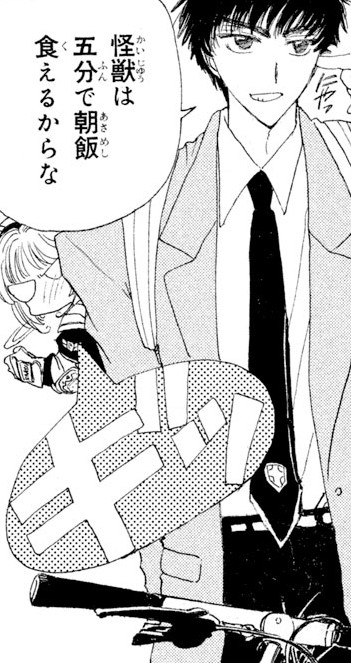
At breakfast, Touya teases Sakura for stomping down the stairs like a giant monster. He finishes eating and heads out on his bike to meet his friend Yukito on their way to school. Sakura hurries to eat her breakfast and get her roller blades on, so she can see Yukito, too. When they reach Yukito, he commends Sakura for being up early.
桃矢:
「怪獣は五分で朝飯食えるからな」
“Well, monsters can finish breakfast in five minutes.”
Sakura came stomping down the stairs, so her brother Touya calls her a 怪獣, “giant monster”. He’s off on his bike to meet his friend Yukito, and Sakura wants to see Yukito too. 食う is a rough word for “eat”, and its potential is 食える. 五分で marks how long the meal takes. If she’s a monster, five minutes should be plenty.
A few verbs have no potential. 分かる, “understand”, and ある, “exist”, already describe states, so nobody says 分かれる for “can understand”.
Ichidan Verbs Add られる
For an ichidan verb, drop the る and add られる. 食べる becomes 食べられる, and 見る becomes 見られる. The irregular 来る becomes 来られる.
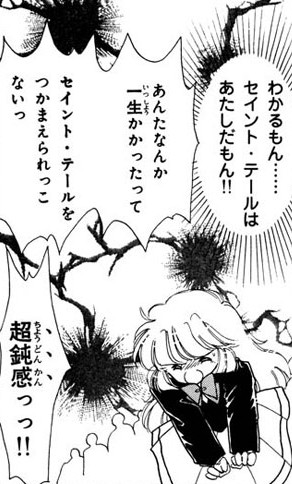
Asuka Jr. is feeling down after Saint Tail committed a theft without giving him advance notice. When Meimi tries to console him, he tells her she doesn’t understand Saint Tail.
芽美 (thinking):
「わかるもん…… セイント・テールはあたしだもん!!」
“I do understand... Because I'm Saint Tail!!”
芽美:
「あんたなんか一生かかったってセイント・テールをつかまえられっこないっ」
“Someone like you can take a lifetime and there's no way you can catch Saint Tail!”
Saint Tail pulled off a theft without warning Asuka Jr. first, and he’s moping. When Meimi tries to cheer him up, he tells her she doesn’t understand Saint Tail. Meimi thinks to herself that she understands just fine, since she is Saint Tail. Out loud, she snaps back. つかまえる, “catch”, is an ichidan verb, so its potential is つかまえられる. 〜っこない attaches to the stem and means “there’s no way”. 一生かかったって is “even if it takes your whole life”.
This られる has the same shape as the receptive, so 見られる can mean “can see” or “be seen”. Receptive verbs with 〜れる shows how to tell them apart. Godan verbs keep the two separate. 読める is “can read”, and 読まれる is “be read”.
Set Phrases like 信じられない
A few ichidan potentials work almost like set phrases. 信じられない, “unbelievable”, is one of the most common, usually as an exclamation. 考えられない means “unthinkable”, and 考えられる means “conceivable”.
As Ran sleeps, she’s carried to a sink filled with water and almost drowned. After, Conan considers the coffee Ran drank earlier must have been drugged, or else Ran would have fought back.
Since Mrs. Yone, who prepared the coffee with Ran’s help, was with Kogoro at the time of the attack, Korogo narrows the list of suspects to four who were out of sight while the coffee was being prepared.
小五郎:
「という事は、あなた方の中の誰かが米さんと蘭の目を盗んで睡眠薬を入れたとも考えられますな?」
“Considering that, isn't it possible one of you slipped past Mrs. Yone and Ran and put sleeping pills in?”
Ran was nearly drowned in her sleep, and Conan suspects the coffee she drank earlier was drugged. Mrs. Yone, who made the coffee with Ran’s help, was with Kogoro during the attack. That leaves four suspects who were out of sight while the coffee was being made. 目を盗む means “do something behind someone’s back”. とも考えられます says the theory is “also conceivable”. Kogoro is laying out a possibility, and ますな? presses the suspects to agree.
Dropping the ら
In casual speech, ichidan verbs and 来る often lose the ら. 見られる becomes 見れる, 来られる becomes 来れる, and 食べられる becomes 食べれる. Japanese calls these ら抜き言葉, “ら-dropped words”.
The short form can only be the potential. 見れる never means “be seen”. Textbooks, news, and formal writing keep the ら. Manga dialogue drops it all the time, most often with short verbs like 見る, 来る, 寝る, and 出る.
する has no potential form of its own. The separate verb できる takes its place. A noun that takes する takes できる the same way, so 集中する, “concentrate”, becomes 集中できる.
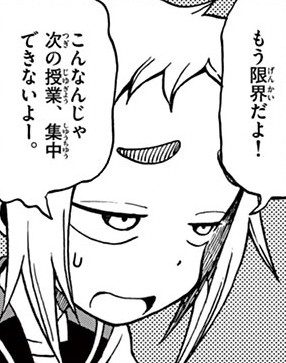
Mina is starving and wants to eat lunch right away, but Yukari reminds her that there’s one more class first. 限界 is “limit”. こんなんじゃ is a casual こんなのでは, “like this”. On an empty stomach, Mina can’t 集中する, so she says 集中できない.
できる also follows a noun with が. 料理ができる is “can cook”, and 日本語ができる is “can speak Japanese”.
Marking What You Can Do with が
A potential describes a state, much like 好き or 分かる. The thing someone can do often takes が instead of を, so お茶を飲む becomes お茶が飲める.
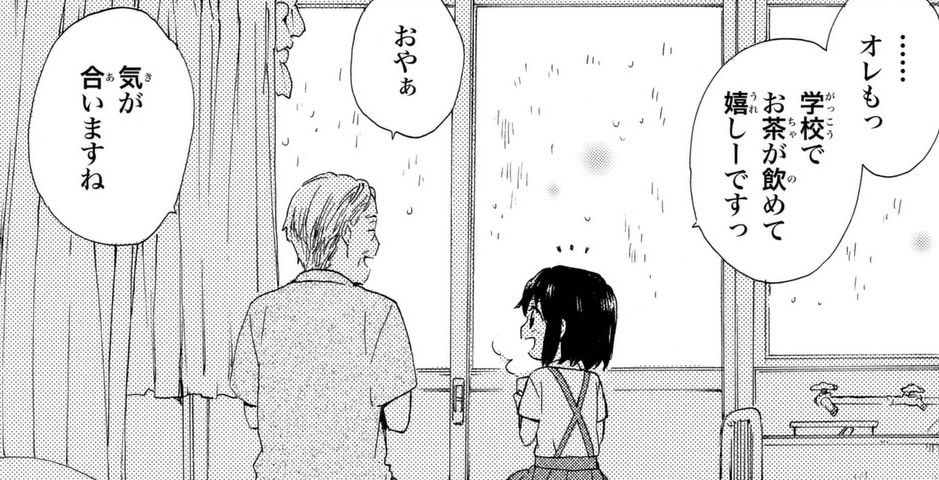
Hinata has taken a classmate to the nurse’s office, where an elderly man is sipping tea. He offers her a cup. お茶が marks the tea as what she gets to drink. 飲めて is the て-form of 飲める, and it gives the reason she’s happy. 嬉しー is a stretched 嬉しい. The man answers with 気が合いますね, “we’re kindred spirits”.
を is common too, especially in casual speech, as in 漢字を読める. Casual speech also drops the particle altogether. 超能力使えるの? asks “can you use psychic powers?” with no particle after 超能力.
Ability or Circumstances
The potential doesn’t separate skill from opportunity. Someone who 泳げる might know how to swim, or might have a pool that’s open today. Context decides.
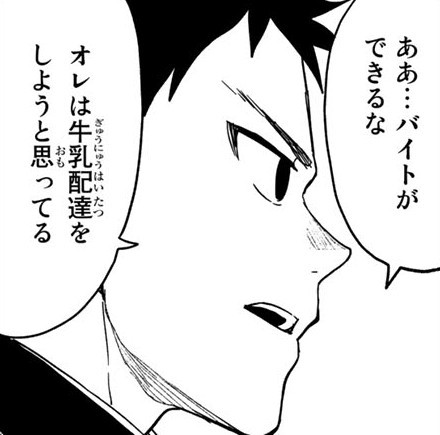
Ayumu and Takeru have just started high school. バイト is short for アルバイト, “part-time job”. His skills haven’t changed. What changed is that high school students are allowed to work, so バイトができる means a job is now open to him. He already has one in mind, 牛乳配達, “milk delivery”.
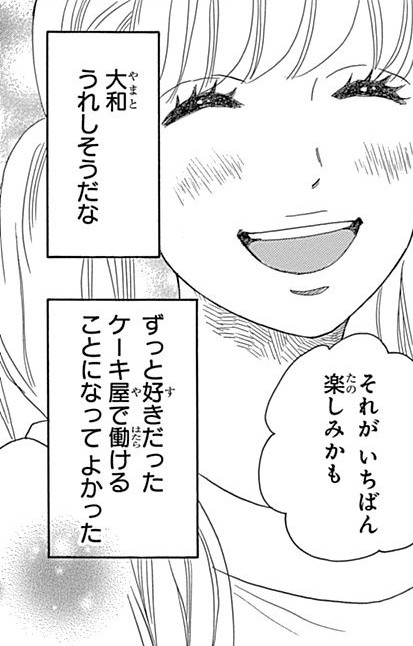
Rinko (Yamato) interviews for a summer job at her favorite cake shop. Following the interview, she is hired and is set to start work the next day. She’s excited at all the new techniques she’ll learn that she’ll use to make various sweets for her boyfriend, Takeo.
凛子:
「それがいちばん楽しみかも」
“I think that's what I'm most looking forward to.”
猛男:
「大和うれしそうだな」
“Yamato looks happy.”
「ずっと好きだったケーキ屋で働けることになってよかった」
“I'm glad it worked out that she can work at the cake shop she's always loved.”
Rinko interviewed for a summer job at her favorite cake shop and got it. 働ける is the potential of 働く, “work”. Rinko didn’t learn a new skill. The shop hired her, and that’s what makes working there possible. ことになって says it was decided for her, and Takeo is glad it worked out.
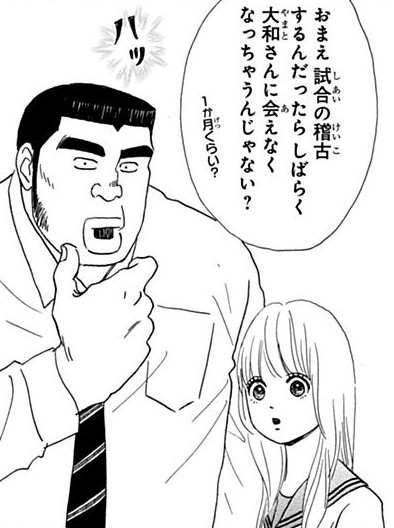
Members of the judo team plea for Takeo to help them in their upcoming match against a rival high school. Takeo quickly accepts their request, but Sunakawa considers how this will impact Takeo’s new relationship with Yamato.
The judo team begged Takeo to help in a match against a rival school, and he said yes on the spot. Sunakawa sees the catch. A month of training would leave Takeo no time for his girlfriend, Yamato. 会える is the potential of 会う, “meet”. 会えなくなる means “become unable to meet”, and ちゃう adds that it would be a shame.
Saying You Can’t
The negative ends in ない, like any ichidan verb. 描ける, “can draw”, becomes 描けない, “can’t draw”.
Cocoa once made latte art in Chiya’s coffee, and now Chiya has tried it herself in the tea she’s serving. Before anyone sees it, she lowers expectations. ココアちゃんたちみたいに means “like Cocoa and the others”. The けど at the end leaves her apology unfinished.
Rough speech turns ない into ねえ or ねー, the same as any other negative. 出せない becomes 出せねー.
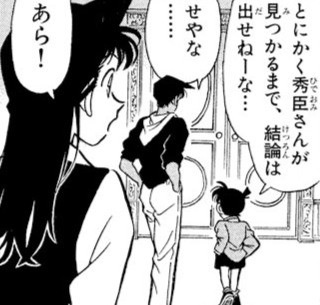
Conan and Heiji end up staying at the same mansion when a murder occurs. They decide to put their heads together to try and determine who the culprit is.
コナン:
「とにかく秀臣さんが見つかるまで、結論は出せねーな…」
“Anyway, I guess we can't come to a conclusion until we find Hideomi...”
A murder has happened at the mansion where Conan and Heiji are staying, and the two are working out who did it. 結論を出す means “reach a conclusion”, so 結論を出せる is “can reach a conclusion”. In this negative statement, は takes the place of を. Until Hideomi turns up, the conclusion has to wait.
Another blunt negative uses ん, as in 行けん and 信じられん. Negation with 〜ない covers both endings.
Polite Forms
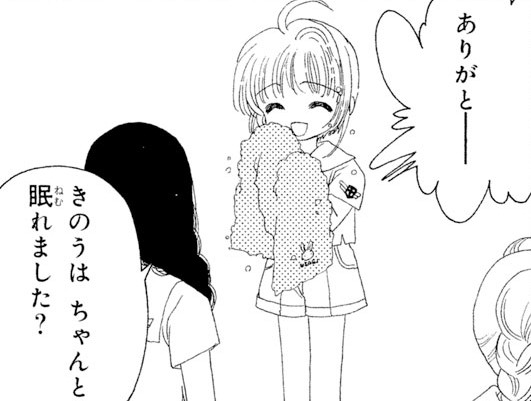
ます attaches to the stem, as with any ichidan verb. 眠れる becomes 眠れます, 眠れません, and 眠れました.
During an overnight school trip, a classmate tells a ghost story right before bedtime. While everyone else easily falls asleep, Sakura is too scared to close her eyes. The next morning, when Sakura washes her face, Tomoyo hands her a towel.
On a school overnight trip, a classmate told a ghost story right before bed. Everyone else fell asleep, but Sakura was too scared to close her eyes. In the morning, Tomoyo hands her a towel. 眠る is “sleep”, and 眠れました? asks whether sleep came at all. ちゃんと means “properly”.
Nobody can force sleep, so 眠れない is the everyday way to say “can’t sleep”.
Requests and Wishes with もらえる
もらう, “receive”, has the potential もらえる. After a て-form, 〜てもらえる asks or hopes for a favor. Having someone do something with 〜てもらう covers requests like 待ってもらえる?, “could you wait?”
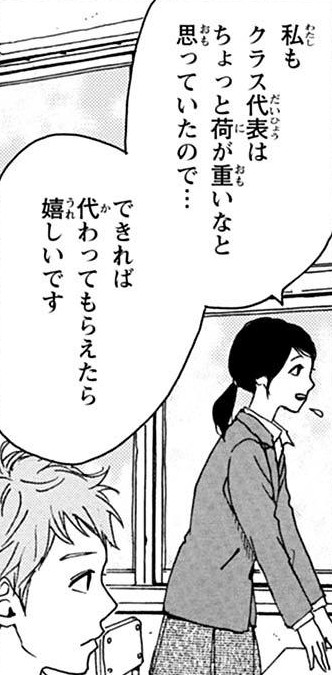
Takako and Azu tell their teacher they want to participate in the sports day relay race. The teacher points out that participants have already been decided, then one of the decided participants chimes in.
生徒:
「私もクラス代表はちょっと荷が重いなと思っていたので…」
“I was also thinking I have too much on my plate as class representative.”
Takako and Azu tell their teacher they want to run in the sports day relay. The teacher says the runners are already chosen, and then one of them speaks up. She’s also class representative, and the relay feels like too much. 代わってもらえたら is “if I could have someone take my place”. できれば, “if possible”, is the conditional of できる, so this line has two potentials.
The humble いただく becomes いただける the same way. Shops and announcements use it all the time, as in お楽しみいただけます, “you can enjoy”.
Bearing a Situation with 〜ていられる
The potential of いる is いられる. After a て-form, 〜ていられる says someone can keep doing something or stay as they are. It usually comes up as a negative or a rhetorical question, about something nobody could stand to keep doing. Casual speech drops the い and says 〜てられる.
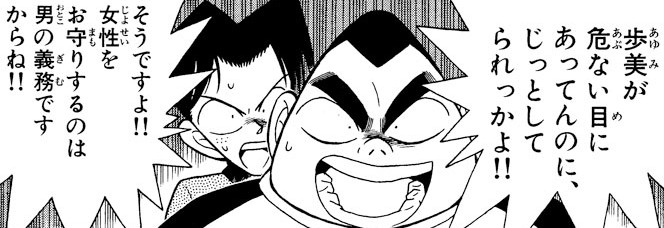
During a hide-and-seek game at the park, Ayumi hides in a car trunk and falls asleep. She wakes to find the car moving and discovers a bag of money, a slimy saw, and what seems like a severed head. Conan, tracking her via their Detective Boys badges, prepares to pursue on his electric skateboard. Genta and Mitsuhiko join him on it, but Conan urges them to stay behind due to the danger.
元太:
「歩美が危ない目にあってんのに、じっとしてられっかよ!!」
“Ayumi is in danger, so how can I just stand by and do nothing?”
光彦:
「そうですよ!! 女性をお守りするのは男の義務ですからね!!」
“That's right! It's a man's duty to protect women!”
During hide-and-seek, Ayumi hid in a car’s trunk, and the car drove off with her inside. Conan plans to chase it and tells Genta and Mitsuhiko to stay behind. Genta refuses. あってんのに is a casual あっているのに, “even though she’s in (danger)”. じっとしてられっか is short for じっとしていられるか, with the る squeezed into a small っ. The か makes it rhetorical. Genta can’t just stand there.
〜ていられない also contracts to 〜てらんない, as in やってらんない, “I can’t put up with this”.
English uses “can see” and “can hear” for 見える, “be visible”, and 聞こえる, “be audible”. These are separate verbs, not potentials. They describe sights and sounds that reach someone on their own. 見られる and 聞ける say that someone gets the chance.
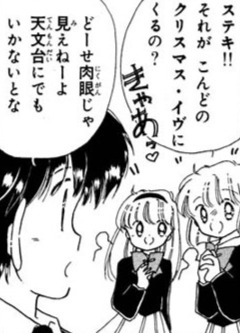
Before class, Asuka Jr. brings up a comet that passes Earth once every fifty years, and Ryoko asks if it’s coming on Christmas Eve. 肉眼 is “the naked eye”, and じゃ is a casual では. 見えねー is a rough 見えない, so the comet won’t be visible without help. At a 天文台, “observatory”, someone would get the chance to see it. That would be 見られる or 見れる.
The Potential in the Kansai Dialect
Kansai speech often builds “can’t” from a receptive-looking stem and へん. 泳げない becomes 泳がれへん, and 行けない becomes 行かれへん. できない becomes でけへん.
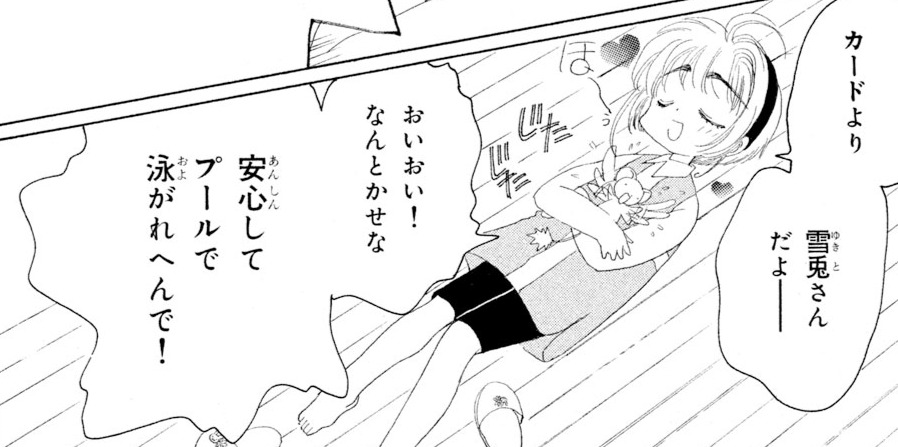
Sakura and Kero are supposed to discuss a Clow Card causing problems at the elementary school. After taking her homemade pancakes to her brother and Yukito, Sakura’s happiness over making something for Yukito overtakes her concern of Clow Cards. Kero tries to get her back on track.
A Clow Card is causing trouble at Sakura’s school, and Kero wants to talk about it. Sakura has just given homemade pancakes to Yukito, and she can’t think about anything else. 安心して means “without worry”. 泳がれへん is Kansai for 泳げない, and the final で works like よ. Until the card is caught, nobody can swim in that pool safely. Grammar in the Kansai dialect covers へん and で.
Similar Forms
Several other forms also translate as “can” or come close.
Form
Example
Meaning
Potential
読める
can read
〜ことができる
読むことができる
can read, said more formally
見える・聞こえる
見える
can be seen
Potential + ようになる
読めるようになる
come to be able to read
〜てもいい
読んでもいい
may read
ことができる means the same as the potential but takes longer to say, and it sounds more formal. ようになる marks the change from can’t to can. 〜てもいい gives permission, which is a different question from whether someone is able.